
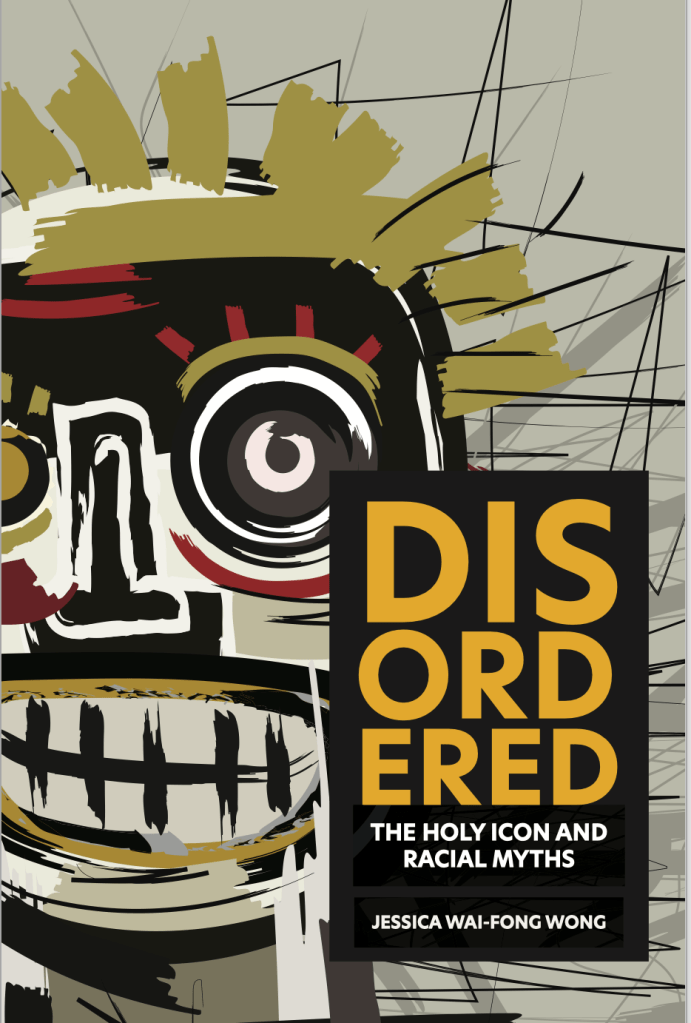
Jessica Wai-Fong Wong is an associate professor of systematic theology at Azusa Pacific University and works in political and liberation theologies with a focus on race, gender, society, and visual theory. She is an ordained ruling elder in the Presbyterian Church (USA) and holds degrees in Christian theology and ethics from Duke Divinity School and Duke University. In addition to articles and chapter contributions, she is the author of Disordered: The Holy Icon and Racial Myths (2021, Baylor University Press) and a co-author of Lamenting Racism: A Christian Response to Racial Injustice (2021).
Her current research includes Black Monsters, Yellow Ghosts, which considers the racial and sociopolitical dynamics of Asian American invisibility and Black hypervisibility, and the Christian understanding of sight as a locus of justice and faithfulness.
What People Are Saying
“Informed by the latest in race theory, yet with prose that is refreshingly accessible, Wong invites Christians to confront the depths of racism. This book takes images seriously as theological cornerstones and also as sites where theology goes wrong, where racism pulls theology toward heresy. Naming and challenging the worship of whiteness, Wong offers an important contribution to the theology of race that speaks to anti-Blackness, anti-Asian racism, and anti-indigenous racism today.”
–Vincent Lloyd, Associate Professor of Theology and Religious Studies and Director of the Africana Studies Program, Villanova University
“Jessica Wong’s Disordered is an astute, trenchant, and timely analysis of the consequences of elevating whiteness to the level of an icon. By treating cis-gendered white masculinity as the earthly manifestation of divine order, those groups and subject positions that wander from the norm are seen as disordered, deficient, and in need of salvation/civilization. Wong’s ground-breaking text offers an honest examination of how Christian (iconic) theology provides the underpinnings for modern racial myths and imaginaries but this book also reads theology against itself to find resources for alternative modes of vision, relation, and participation. For those interested in race, coloniality, and theology, this is a must read.”
–Joseph Winters, Alexander F. Hehmeyer Associate Professor of Religious Studies and African & African American Studies, Duke University
“In Disordered: The Holy Icon and the Racial Myths, Jessica Wong traces the trajectory of the racial formation of the Whitened iconic figure of Jesus in relation to colonialism’s Other as dark and threatening. Her interrogation of these constructed racial myths, in relation to our understanding of Christian redemption and the figure of Jesus as the Holy One, challenges us to re-examine and re-imagine what interpretations of redemption have been unattended or erased. In doing so, we may well see ourselves on the way to becoming with each other in ways that will form the world into an imagined, hopeful, inclusive, and relational redemption. For Christians interested in racial formations, redemption, and the problematic dialectic of the self over and against the racialized other, this is a must-read.“
–Wonhee Anne Joh, Professor of Theology and Culture, Garrett-Evangelical Theological Seminary
“In recent years, a number of scholars have taken up the task of analyzing the parallels between racial and religious logics. Some help us to see that their proximity to one another is because they are, in fact, derived from one another, and not separate disconnected phenomena. In Disordered: The Holy Icon and Racial Myths, Jessica Wai-Fong Wong makes that case. Wong does a masterful job of examining this Western racial-religious connection by looking at it through the lenses of icon theology. In so doing, Wong helps us to see how its underpinning of aesthetics function as a mechanism to calibrate embodied encounters by the registers of whiteness, labeling bodies as holy and unholy, and recognizing order and disorder as racial markers, while simultaneously prescribing our moral obligations by the same registers. Wong argues that ultimately, we are called to live into a different order, into God’s Oikonomia. This book is masterfully written, and very timely.”
–Reggie L. Williams, Professor of Christian Ethics, McCormick Theological Seminary
 Jessica W. Wong